PDI Tips
How to Check a New Car Before Taking Delivery
A structured walkthrough of what to inspect on a brand-new car at the dealership — from paint and panel gaps to electronics, documents and the test drive — before you accept the keys.
Delivery day is usually rushed. The car is parked under showroom lighting, decorated, and often already washed and polished. That is the worst possible environment for spotting a transport scratch, a mismatched panel or a repaired bumper — and it is also the last moment where raising an issue is easy to resolve.
This guide covers what an experienced inspector actually looks at, in the order it should be done. You can use it yourself, or use it to understand what a professional Pre-Delivery Inspection covers.
1. Set up the conditions before you start
Most delivery-day disputes come down to visibility. Before you inspect anything, insist on three things:
- Daylight, in the open — showroom spotlights hide swirl marks and hide repaint texture.
- A clean, dry car — dust and water droplets mask fine scratches. Ask for a wash well before your slot.
- Enough time — an unhurried walkaround plus functional checks realistically needs an hour or more.
2. Verify the identity of the car
Confirm the car in front of you is the one you agreed to buy. Check the VIN/chassis number on the plate and stamped location, the engine number, the manufacturing month and year, and the colour and variant code. Match all of it against the invoice and the Form 22 documentation.
Manufacturing date matters: a car built many months before delivery is not automatically faulty, but it changes warranty timelines, battery condition and tyre age, and it is legitimate information to have before you pay.
3. Paint and body: the slow walkaround
Walk the car twice — once at eye level, once crouched so you view each panel at a shallow angle against a reflection. Reflected straight lines reveal waviness that a head-on look never will.
- Panel gaps: consistent width along the full length of bonnet, doors, boot and bumpers.
- Colour and texture match between adjacent panels, especially bumper-to-fender.
- Orange peel, dust nibs, sanding marks or overspray on rubber trim and beading.
- Scratches, stone chips and dents on the roof, boot lip and lower doors — the places people forget.
- Glass: manufacturer marks and matching date codes on all windows and the windscreen.
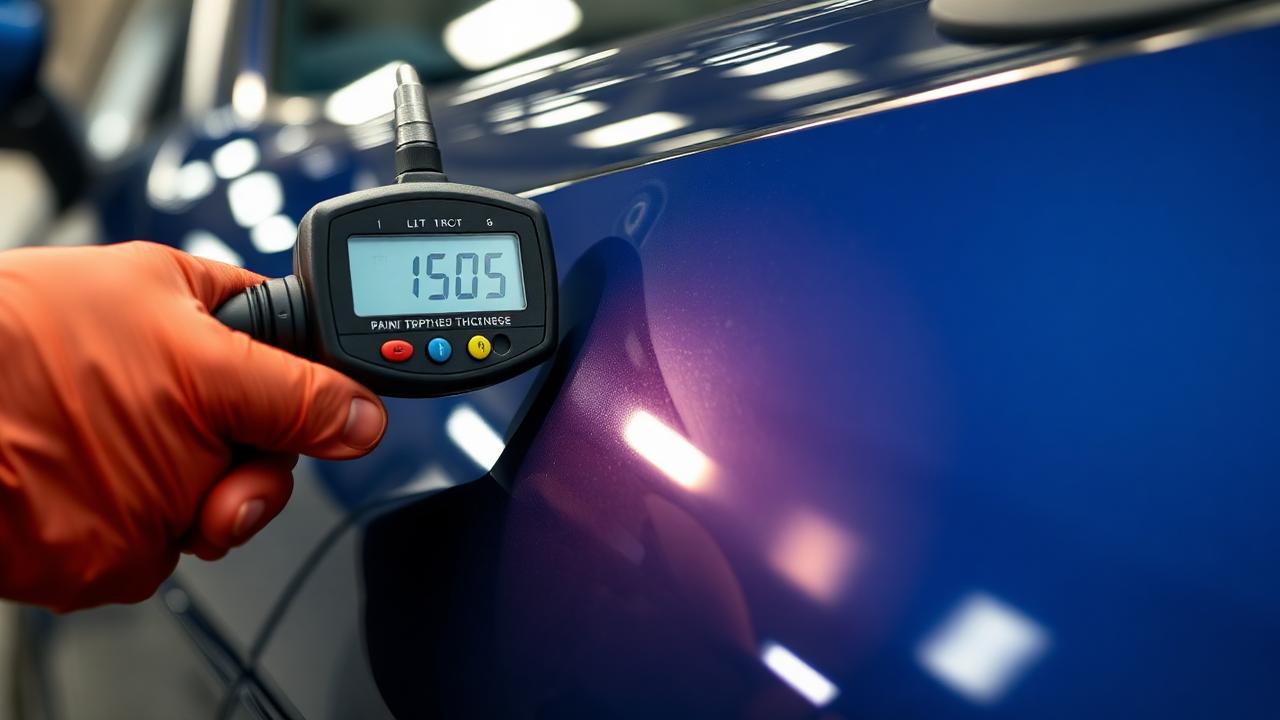
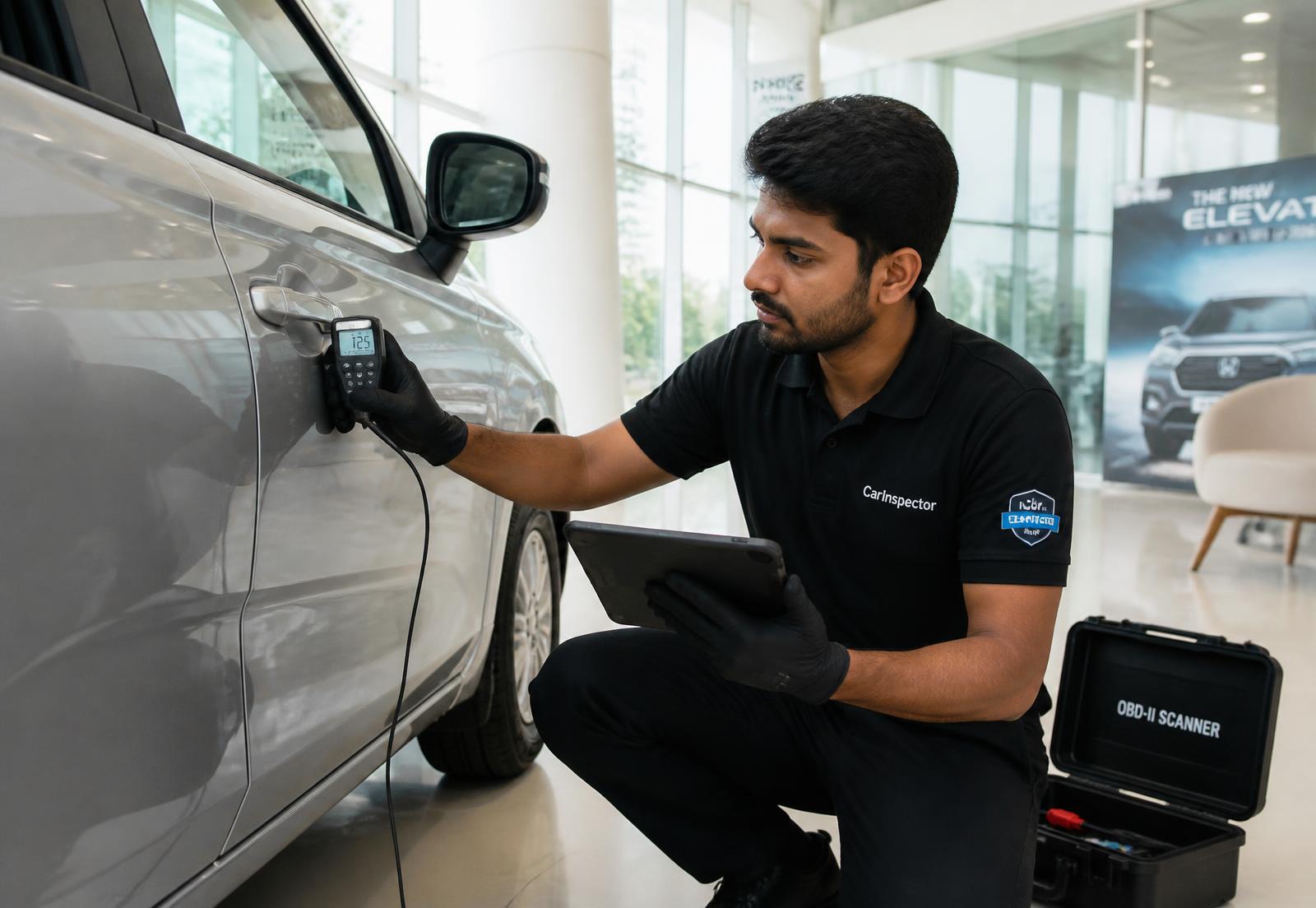
A paint thickness gauge makes this objective rather than a matter of opinion. Readings that jump sharply on one panel usually indicate a repaint or filler, which is worth explaining before delivery, not after.
4. Tyres, wheels and the spare
Read the DOT code on every tyre, including the spare. It gives the week and year of manufacture. Check that all five match in brand and pattern, look for flat spots from long static storage, and confirm the alloys are free of kerb rash and transport marks. Confirm the jack, tools and, where applicable, the puncture repair kit are present.
5. Under the bonnet and underbody
- Fluid levels: coolant, brake fluid, washer fluid and engine oil, plus any signs of leakage or residue.
- Battery terminals, clamps and the manufacturing date on the battery.
- Untouched fasteners — clean, unmarked bolt heads suggest nothing has been dismantled.
- Underbody: no scrapes, no fresh undercoating patches, no damaged heat shields.
6. Interior and electronics
Work systematically rather than randomly pressing buttons. Every seat adjustment, every window, every door lock, both mirror motors, the sunroof through its full travel, all lights and indicators, wipers on all speeds, horn, air conditioning on every vent and blower speed, infotainment with a paired phone, reverse camera and parking sensors, and every warning lamp behaving correctly at ignition.
Check the odometer reading. A modest figure from factory and yard movement is normal; a large number needs an explanation.
7. The pre-delivery drive
A short drive tells you what a static check cannot: braking behaviour, steering pull, clutch and gearshift quality, unusual noises over rough surfaces, and whether any fault codes appear. An OBD scan alongside the drive can surface stored codes that no dashboard lamp is currently showing.
8. Documents and handover
- Invoice, Form 22, insurance policy details and temporary registration where applicable.
- Owner's manual, warranty booklet and service schedule.
- Both keys, and confirmation that both work including remote functions.
- Accessories and freebies listed on the invoice, physically present in the car.
What to do if you find something
Document it — photograph the issue with the car identifiable in the frame — and get the dealership to acknowledge it in writing before delivery is completed. Issues raised before handover are usually resolved as a delivery condition. The same issues raised a week later frequently become a warranty argument.

If you cannot be present in person, a Live Video Call PDI lets an inspector guide someone at the dealership through the same visual and functional sequence in real time.
Frequently Asked Questions
Need an Expert Set of Eyes on Your New Car?
Don't leave your new-car delivery to chance. Get your vehicle inspected before you take the keys.
Based on real-world PDI experience. Reviewed by Sure Drives PDI.